How to Improve Cognitive Performance Naturally: 10 Proven Strategies That Work

Learn how to improve cognitive performance naturally using evidence-based nutrition, mindfulness, and supplements. Discover 10 powerful ways to boost focus, memory, and brain energy — backed by neuroscience.

Your brain is your most valuable asset. It powers your decisions, focus, creativity, and emotional stability. Yet, modern life — with its endless notifications, stress, and multitasking — constantly drains cognitive resources.

When cognitive performance dips, it’s not just your memory or focus that suffers — it’s your entire quality of life. Fatigue, procrastination, and “mental fog” can make even simple tasks feel overwhelming. For professionals, entrepreneurs, or students, these lapses can mean lost productivity, poor decision-making, and frustration.

The Hidden Cost of Poor Cognitive Function
Low cognitive function isn’t just inconvenient — it’s expensive. Studies show that decreased mental performance correlates with lower career success, reduced creativity, and even accelerated aging. The brain consumes nearly 20% of your body’s total energy, so when it’s undernourished or overstressed, everything else slows down too.

 Who Is Most at Risk for Cognitive Decline?
– People under chronic stress
– Those with poor sleep or inconsistent nutrition
– High-achievers who constantly multitask
– Older adults experiencing mild memory lapses
– Individuals exposed to environmental toxins or inflammation

The good news? You can reverse much of this decline with natural, science-backed habits.

The Science Behind Cognitive Enhancement
Cognitive performance depends on how efficiently your brain processes, stores, and retrieves information.

How Neurotransmitters and Brain Cells Influence Performance
Your brain relies on neurotransmitters — chemical messengers like dopamine, acetylcholine, and serotonin — to power thought, motivation, and mood. Balanced levels of these chemicals improve alertness, while deficiencies can cause brain fog or distraction.

The Role of Neuroplasticity in Focus, Memory, and Learning
Neuroplasticity is your brain’s ability to form and reorganize synaptic connections. The more you challenge your brain with new information or focused tasks, the stronger these pathways become. This is why mental exercise and mindfulness are so vital — they physically reshape your brain to perform better.

10 Natural Ways to Improve Cognitive Performance

1. Prioritize Brain-Boosting Nutrition
Your brain needs fuel. Diets high in healthy fats, antioxidants, and micronutrients enhance cognition and protect against decline.

Key Nutrients for Focus and Memory
– Omega-3 fatty acids (from fish oil, walnuts, flaxseed) improve communication between brain cells.
– B Vitamins (B6, B9, B12) support neurotransmitter production and reduce mental fatigue.
– Choline (found in eggs and liver) is essential for memory and mental sharpness.
– Antioxidants (blueberries, green tea, dark chocolate) combat oxidative stress in brain tissue.

2. Use Mindfulness and Meditation to Improve Focus
Mindfulness reduces mental noise. Practicing 10 minutes of daily meditation improves concentration and increases gray matter density in brain regions linked to attention and memory.

3. Exercise for Neurogenesis and Mental Energy
Physical movement releases brain-derived neurotrophic factor (BDNF) — a protein that grows new neurons. Even brisk walking for 30 minutes daily can elevate your mood, sharpen focus, and reduce anxiety.

4. Sleep: The Brain’s Secret Weapon
Sleep is when your brain consolidates memories, clears toxins, and resets neural circuits. Lack of sleep can cut attention span by 30–40%. Aim for 7–8 hours of consistent, high-quality sleep each night.

5. Hydration and Blood Flow: The Forgotten Factor
Even mild dehydration can impair cognition. Your brain is nearly 75% water, and blood flow delivers oxygen and nutrients it needs. Drink filtered water regularly and limit caffeine late in the day.

6. Cognitive Supplements and Nootropic Stacks (Natural Options)
Some natural supplements can support mental clarity and performance without synthetic stimulants.

Adaptogens, Herbs, and Natural Compounds That Work
– Bacopa Monnieri – Enhances memory and reduces anxiety.
– Lion’s Mane Mushroom – Supports neuron growth and long-term brain repair.
– Rhodiola Rosea – Increases energy and reduces fatigue under stress.
– L-Theanine + Caffeine – Creates smooth focus without jitters.
– Ginkgo Biloba – Boosts circulation and supports mental clarity.

(Note: Always consult a healthcare professional before starting supplements.)

7. Reduce Stress to Prevent Brain Burnout
Chronic stress raises cortisol, which shrinks neurons in the hippocampus — your memory center. Regular relaxation practices like deep breathing, yoga, or nature walks help restore balance.

8. Practice Deep Work and Focus Training
Set aside uninterrupted time for focused work. Apps like Forest or Focus@Will train your brain to maintain attention longer. Over time, you’ll notice deeper concentration and fewer distractions.

9. Keep Learning — Cognitive Challenge and Brain Growth
The more you learn, the stronger your neural connections become. Learn a language, play an instrument, or engage in strategic games to keep your brain agile.

10. Digital Detox and Mindful Technology Use
Constant screen exposure floods your brain with dopamine, making it hard to focus. Schedule “dopamine fasts” — short breaks from screens — to reset your reward system.

The Connection Between Gut Health and Brain Function
Your gut and brain communicate via the vagus nerve, influencing mood, energy, and focus. A balanced gut microbiome can improve cognition by regulating inflammation and neurotransmitter production. Eat probiotic-rich foods like yogurt, kefir, and fermented vegetables to support this connection.

Signs You’re Experiencing Cognitive Fatigue (and What to Do About It)
– Frequent forgetfulness
– Mental fog or lack of clarity
– Difficulty focusing on tasks
– Feeling unmotivated or mentally “flat”

If you experience these, it’s your brain signaling for rest, hydration, or nutrition — not more caffeine.

Natural Supplements That Support Cognitive Function
Evidence-based nootropics can help improve mental energy and resilience.

Evidence-Based Ingredients
– Bacopa Monnieri – Enhances recall speed.
– Lion’s Mane – Supports nerve growth factor (NGF).
– L-Theanine + Caffeine – Smooth sustained alertness.
– Phosphatidylserine – Aids cell communication.

How to Choose Quality Brain Supplements
– Check for third-party testing and clinical backing.
– Avoid synthetic “proprietary blends” with undisclosed doses.
– Choose brands with transparency and clean ingredient lists.

Lifestyle Habits That Reinforce Long-Term Brain Health
– Keep consistent sleep and wake cycles.
– Eat whole, unprocessed foods.
– Exercise your body and your mind daily.
– Build strong social connections.
– Schedule regular downtime to reset.

FAQs About Cognitive Performance and Natural Enhancement
1. What’s the best natural supplement for focus?
Bacopa Monnieri and Lion’s Mane are two of the most researched and effective for focus and mental clarity.

2. Can lifestyle really improve brain performance?
Absolutely. Consistency in sleep, nutrition, mindfulness, and exercise builds long-term resilience.

3. How soon can I expect results?
With daily application, many notice improvements in 2–4 weeks, especially with meditation and nutrition.

4. Do nootropics really work?
Yes, when used responsibly and paired with healthy lifestyle habits. Natural nootropics support — not replace — good brain hygiene.

Conclusion: Building a Brain-Healthy Lifestyle That Lasts
You don’t need a magic pill to boost cognitive performance — just the right habits, practiced consistently. By combining nutrition, mindfulness, exercise, and evidence-backed supplements, you can achieve sustained focus, sharper memory, and higher productivity — naturally.

Your brain deserves the same care you give your body. Start today, and your future mind will thank you.

External Reference: Harvard Health: Brain Food and Cognitive Function

The Most Optimal Daily Habit for Brain Health: Unlocking the Mind’s Full Potential

Discover the most optimal daily habit for brain health backed by neuroscience, mindfulness, and modern wellness. Learn how one powerful daily routine can boost focus, memory, and emotional balance.


In today’s fast-paced digital world, brain health isn’t just a luxury — it’s a survival skill. With increasing screen time, constant stress, and information overload, our brains are under more pressure than ever before. Maintaining mental clarity, memory, and emotional stability requires intentional effort and daily habits that nourish the mind.

Brain health refers to how well your brain functions across several domains — cognitive ability, emotional regulation, memory, and decision-making. When the brain is healthy, you think clearly, manage emotions effectively, and remain resilient even in stressful situations.

Neuroscientists often say, “What fires together, wires together.” Every time you learn something new or repeat a healthy habit, your brain creates stronger neural connections. This ability, known as neuroplasticity, allows your brain to adapt and grow even in adulthood. Studies show that engaging in consistent mindfulness practices increases gray matter in areas responsible for focus, learning, and emotional control.

Unfortunately, modern lifestyles often sabotage brain health. Chronic stress releases cortisol, which damages neurons in the hippocampus — the brain’s memory center. Lack of sleep impairs the brain’s ability to clear toxins, while excessive screen time floods your reward system with dopamine spikes, leading to distraction and fatigue.

That’s why it’s crucial to adopt a sustainable daily routine that actively counteracts these negative effects — and mindfulness stands out as the single most powerful habit to achieve this.

Defining “Optimal Daily Habits” for the Brain

Before jumping into specifics, it’s important to understand what makes a habit optimal for brain health. An optimal habit should support brain plasticity and resilience, be sustainable, and improve focus, stress regulation, emotional balance, sleep, and mental clarity.

Your brain thrives on repetition. Regularly engaging in positive behaviors — like mindfulness or journaling — creates strong neural pathways. Over time, consistency reprograms your brain toward calmness, focus, and efficiency.

The Most Optimal Daily Habit for Brain Health: Morning Mindfulness Practice

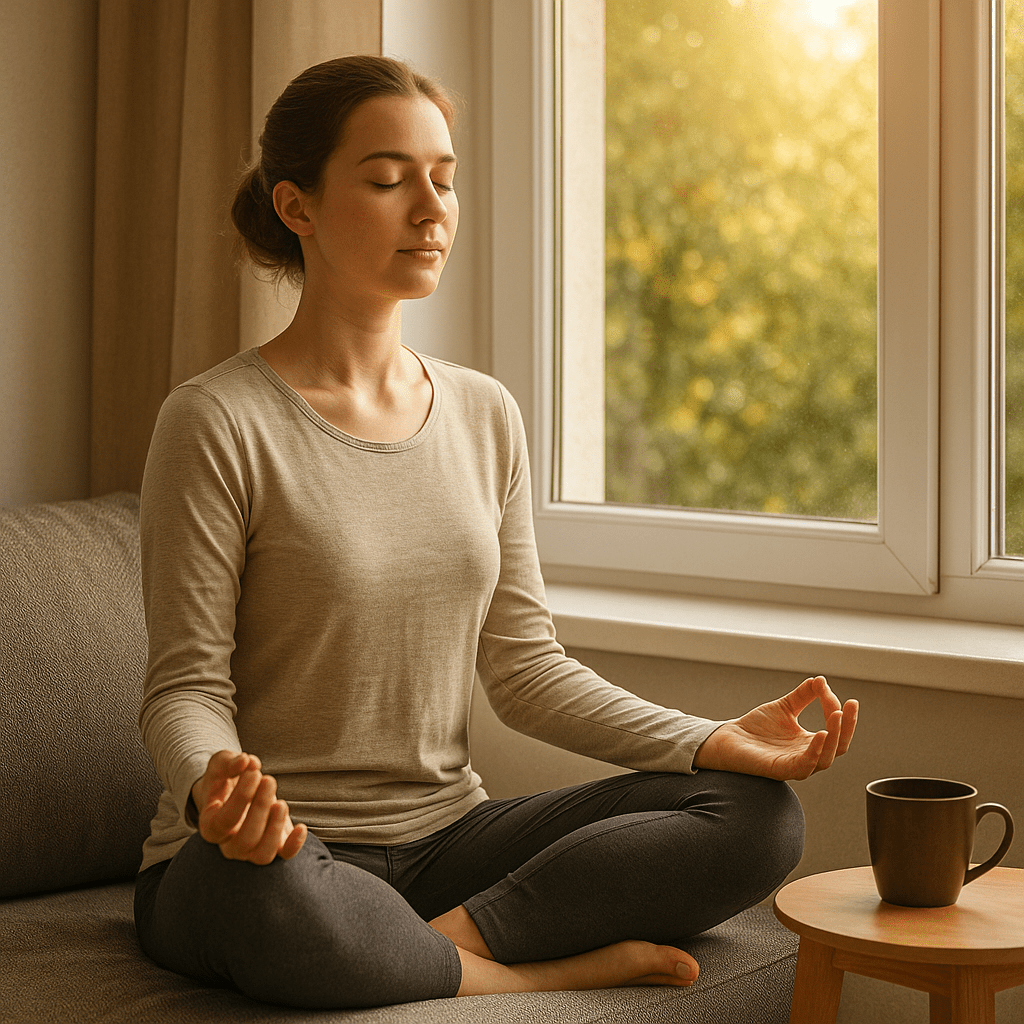
Here’s the truth backed by neuroscience: the single most optimal daily habit for brain health is mindfulness meditation — especially when practiced in the morning.

Mindfulness meditation, the art of focusing your attention on the present moment without judgment, strengthens neural pathways related to focus, memory, and empathy. Research from Harvard Medical School found that just eight weeks of mindfulness practice can physically reshape the brain, increasing gray matter in the hippocampus and reducing stress-related activity in the amygdala.

Even a short daily mindfulness routine can create measurable changes. Spending just ten minutes each morning in mindful breathing or gratitude meditation helps regulate the nervous system, reduce stress hormones, and improve cognitive flexibility.

Step-by-Step Guide to Starting a Morning Mindfulness Routine
1. Choose a quiet space and sit comfortably.
2. Set a timer for ten minutes.
3. Focus on your breath — inhale deeply, exhale slowly.
4. When your mind wanders, gently bring it back.
5. End with gratitude by acknowledging three things you’re thankful for.

Complementary Habits That Amplify Brain Power

While mindfulness is the cornerstone, several other habits can supercharge your brain health journey.

1. Nutrition
Foods rich in omega-3 fatty acids (like salmon and walnuts), antioxidants (like blueberries), and B vitamins support cognitive performance. A Mediterranean-style diet reduces the risk of Alzheimer’s and depression.

2. Exercise
Physical activity increases blood flow and oxygen to the brain, boosting neurogenesis — the creation of new neurons. Even brisk walking for thirty minutes daily can enhance creativity and focus.

3. Sleep Hygiene
During deep sleep, the brain consolidates memories and flushes out toxins. Maintain a consistent sleep schedule and avoid blue light before bedtime to support this vital repair cycle.

4. Social and Intellectual Engagement
Interacting with others and challenging your brain with puzzles, reading, or learning new skills strengthens neural pathways and protects against cognitive decline.

The Neuroscience of Habit Formation and Motivation

Every time you complete a healthy habit, your brain releases dopamine — the “feel-good” neurotransmitter. This reinforces the behavior, making it easier to repeat. Pairing mindfulness with rewarding cues, like your morning coffee, helps make it a lasting ritual.

Simplify your environment and routines. Reducing decision fatigue — by planning your mindfulness sessions at the same time each day — keeps your willpower strong.

Tools and Apps That Support Daily Brain Health Habits

Adopting a new habit is easier when you have digital allies to guide and motivate you.

Meditation and Focus Apps
Apps like Headspace, Calm, and Insight Timer offer guided meditations, breathing exercises, and relaxation music. Brain-training apps like Lumosity and Elevate challenge memory and attention.

Digital Detox Tools
Use blue light filters such as f.lux or your phone’s Night Shift mode to reduce strain. For productivity, apps like Forest and Focus@Will help you stay centered by minimizing distractions.

Real-Life Success Stories

Nothing inspires change like real examples. Across the world, thousands have transformed their mental and emotional well-being through small daily mindfulness habits.

Sarah, a corporate manager suffering from chronic stress, found clarity and emotional control after adding 15 minutes of morning mindfulness and evening reflection. James, a university student battling anxiety, improved his focus and confidence by practicing mindful breathing before exams.

Frequently Asked Questions (FAQs)

1. What is the most optimal daily habit for brain health?

Mindfulness meditation. Practicing it for just 10–15 minutes daily improves focus, reduces stress, and enhances cognitive performance.

2. How long does it take to see results?

Most people experience benefits within 2 to 4 weeks of consistent practice.

3. Can exercise replace mindfulness?

Exercise and mindfulness work best together — one strengthens the body, the other the mind.

4. What foods support brain health?

Salmon, blueberries, spinach, walnuts, and avocados are excellent brain foods.

5. How does sleep affect mindfulness?

Sleep consolidates learning and supports focus. Practicing mindfulness before bed improves sleep quality.

6. Are supplements helpful?

Omega-3s, vitamin B12, and magnesium can support brain performance, but consult your doctor before starting any supplements.

Conclusion: Make Mindfulness Your Daily Brain Health Anchor

Your brain is your most powerful asset — yet it often receives the least care. While many methods enhance cognition, mindfulness meditation stands out as the single most optimal daily habit for brain health. It doesn’t demand expensive tools — only consistency and presence. Through mindful living, you train your brain to become more focused, emotionally balanced, and resilient. Start your day with mindfulness — your future self will thank you.

External Reference: Harvard Health Publishing – Mindfulness Meditation: A Research-Based Overview https://www.health.harvard.edu/mind-and-mood/mindfulness-meditation

I Quit Social Media For 30 Days! (HERE IS WHAT HAPPENED)

My experience from quitting social media…

So for the month of May I decided to challenge myself. I wanted to quit social media for 30 DAYS to see if it would help improve or benefit me in any way.

At first I was really hesitant to do this challenge just because of how active everyone is on social media. I mean in today’s world if your not engaging in technology then it is impossible to live. Or so it seemed.

Honestly I felt like I was gonna miss out on a bunch of stuff. Like people’s pictures from their vacations, or someone having a baby, or another person’s graduation pictures etc. Although, what I found was that I had not missed out on anything, but rather gained some real benefits along the way.

There was five major things that stood out to me during this challenge.

1. INCREASED FOCUS 

Whether you are aware of it or not, almost everyone in the modern world has become a master at distracting their self.  If its not Netflix, its a junk food binge. If not instagram for hours, its Snapchat. If not weed, its alcohol. The list goes on.

The point is, if you really audit yourself and take a hard look on the things you do on a daily basis you will realize how much you truly distract yourself. For me one of the reasons I really wanted to do this challenge was because I discovered SHOCKING stats on how much I was using my phone. Apparently I was on my phone (almost all social media) for an average of 5-6 hours a day! I’m sure some people are worse and some are better. Although, for me and my well-being I knew I had to change.

So before the challenge I would find my self anticipating a notification from my phone a lot. I was essentially not present at all, but rather the total opposite. Also, when I was trying to do a task (like write this blog) I would work for five to ten minutes and then have to check my phone. It was a definite compulsion. Without any sort of focus, tasks would take an eternity and sometimes I just wouldn’t finish. Very unproductive!

Towards the end of the thirty days is when I noticed the change. Without this anticipation or compulsion to check my phone I became deeply focused on the task at hand. Whether it was work on the computer, exercising, or simply talking to somebody, the feeling was there. It was an intense feeling of focus that I had not felt in a long time and that scary part was that I didn’t even notice. I got more work done and simply enjoyed what I was doing. Whatever it was.

From then on I have limited activity on social media to an hour a day. My suggestion is that if you notice yourself having a hard time focusing then figure out what is distracting you the most. Getting that thing under control could be like removing a foggy cloud in your head.


2. REDUCED ANXIETY

This ties in with number one.

I have always had a problem with anxiety. Nothing major that I couldn’t handle, but definitely noticeable. One thing about me is that I tend to be anxious about things that pertain to my self-image. And I am sure many others are the same. Social media is the apparently the ultimate judge for one’s self image nowadays.

For me, before the challenge I would get anxious every time I wanted post on social media. Is this good content? Do I look good enough? What if it doesn’t get that many likes or views? These thoughts were like a refrigerator humming in the back of my mind. In addition, I would get triggered over the littlest things. I knew these thoughts were really vain, but didn’t realize how much they were affecting me.  Anticipating a notification or compulsively checking my phone was making me anxious and irritable.

Around the fifteen day mark is when I started to notice that I was actually more calm and non-reactive to the petty things in life (like getting stuck in traffic). Getting rid of the anticipation and compulsion was like unlocking the chains I had out on my mind. It was a sense of freedom which in turn gave me calmness and a present state.

My suggestion would be to test it out for yourself. Social media makes us unrealistically compare ourself and this can make us stressed and anxious for no reason.

3. AWARENESS OF BAD PATTERNS

This one was the most important for me.

Because I was always distracting my self with social media and reacting to everyday pettiness, I became unconscious of how I was living. My habits and thought patterns were slowing me down so much and I didn’t even realize it.

Before the challenge, when I woke up the first thing I would do was roll over and check my phone. I would try to see who texted or messaged me with my eyes not even fully opened yet. This was one of the worst things I could do because it set me up for a very reactive day instead of an active one. This one bad habit would cascade into more bad habits such as not making my bed, not exercising, not eating breakfast, not doing my best at my job, and many others. Without even noticing, I was living a life with little gratitude or self-respect.

In addition, I noticed what my attitude towards life was. It was dull and resentful in a sense. It was like I had forgot to look around and realize how blessed I really was. Essentially, I was rolling out of bed and dragging myself through the day only to repeat it again in the morning. Sadly, I couldn’t even notice this because I was so used to numbing and distracting myself to this truth.

Around the three week mark I started to gain more awareness. Realizations and intuitive thoughts started to come up in my mind. It was as if they were suffocating in my head, drowned out by all of the trash I was consuming through my phone. This experience taught me how to always audit and check up on myself and to never let myself get into a unproductive cycle.

My suggestion would be to really watch yourself. Pay attention to your thoughts, habits, and behaviors. Are they uplifting you or sabotaging you?


4. BETTER SLEEP

I didn’t think this one was a problem for me but I guess I was wrong.

Before the challenge my sleep routine would go like this. I would hop into bed around eleven and turn on my reading lamp. Then I would get on my phone and start scouring instagram unknowingly for an hour. Or sometimes watch random YouTube videos until I fell asleep. Before I knew it I was going to sleep past midnight, cutting my sleep time for no real reason. Essentially I would sleep while on my phone (again distracting myself). This wasn’t really a problem until I noticed I would Start to wake up in the middle of the night for no reason. Some nights multiple times. As you can imagine I was under slept and becoming unproductive in the daytime.

Because of doing this challenge I indirectly changed my sleep routine. Now I was off my phone for at least an hour before bed and didn’t need to a light in my face while trying to sleep. This led to a fuller nights sleep with almost no interruptions. There were days I only got five to six hours of sleep and was really energized throughout the whole day. It was a really nice benefit that went under the radar for me.

For me I believe it was the light from the phone that was messing with my body clock and sleep hormones. This might be a problem for you too. If you sleep with your phone and tablet I suggest leaving your technology for at least an hour before bed. Test this out and see if it helps.

5. MORE TIME

This one can seem the most obvious, but I think it is also the most overlooked.

Like I stated before, my phone stats were showing that I was on social media for an average five hours a day and I didn’t even notice. Because I value my time so much (my highest priority) I knew I had to cut that down asap. By eliminating phone time I unlocked so much time for myself and things that could benefit me and my goals. This gave me more time to write, exercise, listen to audiobooks, spend time on my business, and much more.

In addition, a subtle change I felt was that the day felt much longer to me. Like a fuller day. I believe this was due to being in a more present state of mind. Whether it was a trick of the mind or not it definitely felt better realizing how much more time in a day I had.

Please don’t underestimate how much time you might be wasting on social media. I understand we have to be on these platforms in this digital era for our business or personal reasons. My suggestion would be to just check in on yourself. Are you consuming more than you are producing? Your time is literally your most important asset. Use it wisely.


THE VERDICT

For me, it really helped me take a step back and audit myself. I learned a lot about  my bad patterns and habits. This awareness undoubtedly helped me improve myself.

Unfortunately, it is almost impossible to get rid of social media from our life. We use it for everything and everybody uses it.  For this reason I have limited my use to an hour to two hours a day. I get all of my content done and engage sparingly throughout my day.

I now prioritize my overall health and time much more, practice focusing more, and really pay attention to my thoughts.

I would definitely recommend anybody to do this challenge. I’m sure most people will not be able to completely get rid of social media from their life (I couldn’t), but at least you can tweak your lifestyle a bit to help achieve your goals. If anything, I believe it will make you more aware of yourself and help you improve. What’re you waiting on, try it out!


“Be better today than you were yesterday”

-Seff Sataday

One-Time
Monthly
Yearly

Make a one-time donation

Make a monthly donation

Make a yearly donation

Choose an amount

¤5.00
¤15.00
¤100.00
¤5.00
¤15.00
¤100.00
¤5.00
¤15.00
¤100.00

Or enter a custom amount

¤

Your contribution is appreciated.

Your contribution is appreciated.

Your contribution is appreciated.

DonateDonate monthlyDonate yearly

The 3 Keys to Self-Improvement

The pillars of self-improvement

You ever have a burst of motivation one day where you think you can accomplish anything? “I’m going to to lose/gain ten pounds this month” we tell ourselves with supreme confidence. Or we say “I’m going to make $20,000 this month” with laser focus and no plan at all.

Then the very next day you’ve lost all that spontaneous motivation and you are right back to your routines and mediocre habits. By the end of the month you are basically in the same spot.

It’s ok I promise. This was basically my life. We want to be the very best version of ourselves, but we seem to never be able to be consistent in achieving our goals.

If this sounds like you, then it is more than likely you haven’t cultivated these three pillars to personal development.

THE PILLARS OF SELF-IMPROVEMENT

  1. Self-Awareness

Sounds obvious, but for most of us it’s almost impossible to see where we stand in the present moment. It’s so easy to see someone else’s faults and imperfections, but when it comes to us we think we are angels.

The truth is, we are all imperfect in a perfect way.

This shouldn’t mean you should accept mediocrity.

Instead, pay attention to yourself. What does your morning routine look like? Are you sleeping at the same time everyday? What’re the recurring thoughts circling in your head everyday? Are they negative or positive? Are you addicted to your phone? What attitude do you have toward your life? Instead of mindlessly numbing your way through the day make sure you PAY ATTENTION to yourself!

Once you understand how you operate on a daily basis you are then able to eliminate the traits, habits, addictions, relationships, that no longer serve you.

We could go really deep on this one key, but in summary one should always be watching their own behaviors in order to unlock their limitless potential.

2. Setting Goals

We all seem to want to set goals for ourself whether in our head or on paper. After all, it is the way we set a path to get from where we are now to where we want to be. Such goals could be wanting to save five hundred dollars this month. Or the famous “I want to gain/lose ten pounds this month”.

Whatever the goal is, we are almost always trying to achieve some sort of benefit or improvement. We don’t usually set goals to go backward in our life.

Although, how do we make them stick?

A simple strategy to implement is to write a personal goal on paper. The goal being the “what” part of the strategy. Be very specific on this part. You don’t want to have vague uninspiring goals. Then write the “why” for that goal. Why do you want to achieve this? This will give you the motivation to pursue. Finally, write down the “how” or the plan to achieve this particular goal. Have steps or routines to act on everyday towards your goal.

3. Self-Discipline

This is the one that ruins all of us at some point. We seem to be unable to control ourself in the most important moments. We tell ourself one thing and then do the opposite. Sometimes we are at war within our mind. Our true best self whispers to us what we should be doing instead of sitting playing video games.

It’s ok. But, we must understand that self-discipline is like a muscle that can be trained. It requires daily diligence.

A way to practice is to first understand your weaknesses and temptations. Try to eliminate these. Reward yourself when you achieve a goal or hold yourself accountable when you mess up. Although, most importantly forgive yourself and move forward. Guilt is very heavy and will only hold you back from being the discipline happy person you want to become.

Remember, be patient with yourself and understand that this is a learned behavior.

IN SUMMARY

To become the best version of ourself we must learn new behaviors and perform new habits.

Nothing in our life will change unless we understand where we are today, where we want to be, and then perform the actions to get there.

Remember to love yourself today. And NEVER STOP Improving!


-Seff Sataday


One-Time
Monthly
Yearly

Make a one-time donation

Make a monthly donation

Make a yearly donation

Choose an amount

¤5.00
¤15.00
¤100.00
¤5.00
¤15.00
¤100.00
¤5.00
¤15.00
¤100.00

Or enter a custom amount

¤

Your contribution is appreciated.

Your contribution is appreciated.

Your contribution is appreciated.

DonateDonate monthlyDonate yearly

What is Kaizen?

The truth behind Self-Improvement…

If you are not familiar with the word Kaizen, allow me to teach you.

KAIZEN Definition:

In essence, the word kaizen originates from a Japanese management strategy and philosophy that simply means continuous slow improvement. Used mainly in the corporate world, companies use this strategy to organize staff, streamline production, eliminate waste, and overall produce more efficiently.

This same philosophy implemented in your personal life can help dramatically improve your health, wealth, and wisdom. Essentially, small incremental improvements compounded over time will help you create habits and actions to acquire long-term success.

The main message of this philosophy is not only to perpetually become better, but to work SMARTER, not harder.


KAIZEN Principles:

Implementing the Kaizen philosophy is a dedication to effectiveness, productivity, and the elimination of waste. The 5 core principles of this strategy are:


  • Standardizing: create a process that is repeatable and organized


  • Focusing: measure and evaluate your progress using data


  • Comparing: check results against your requirements (are you delivering on your promise?)


  • Innovating: find new and better ways to achieve similar results


  • Responding:  adapt to changes or circumstances and evolve methods over time


KAIZEN is the way:

Many people are always looking for “the magic pill” or the quick fix. Unfortunately, there is no such thing. Once you accept this fact you will be able to be massively change your life. The truth is real success is achieved only with TIME and CONSISTENCY.

Improving by 1% everyday can help you achieve any goal because you have developed the HABITS and ACTIONS that are needed.

In the next blog posts we will discuss the simple kaizen methods you can use to make those goals come true.

Let us be better today than we were yesterday!


-Seff Sataday


One-Time
Monthly
Yearly

Make a one-time donation

Make a monthly donation

Make a yearly donation

Choose an amount

¤5.00
¤15.00
¤100.00
¤5.00
¤15.00
¤100.00
¤5.00
¤15.00
¤100.00

Or enter a custom amount

¤

Your contribution is appreciated.

Your contribution is appreciated.

Your contribution is appreciated.

DonateDonate monthlyDonate yearly